
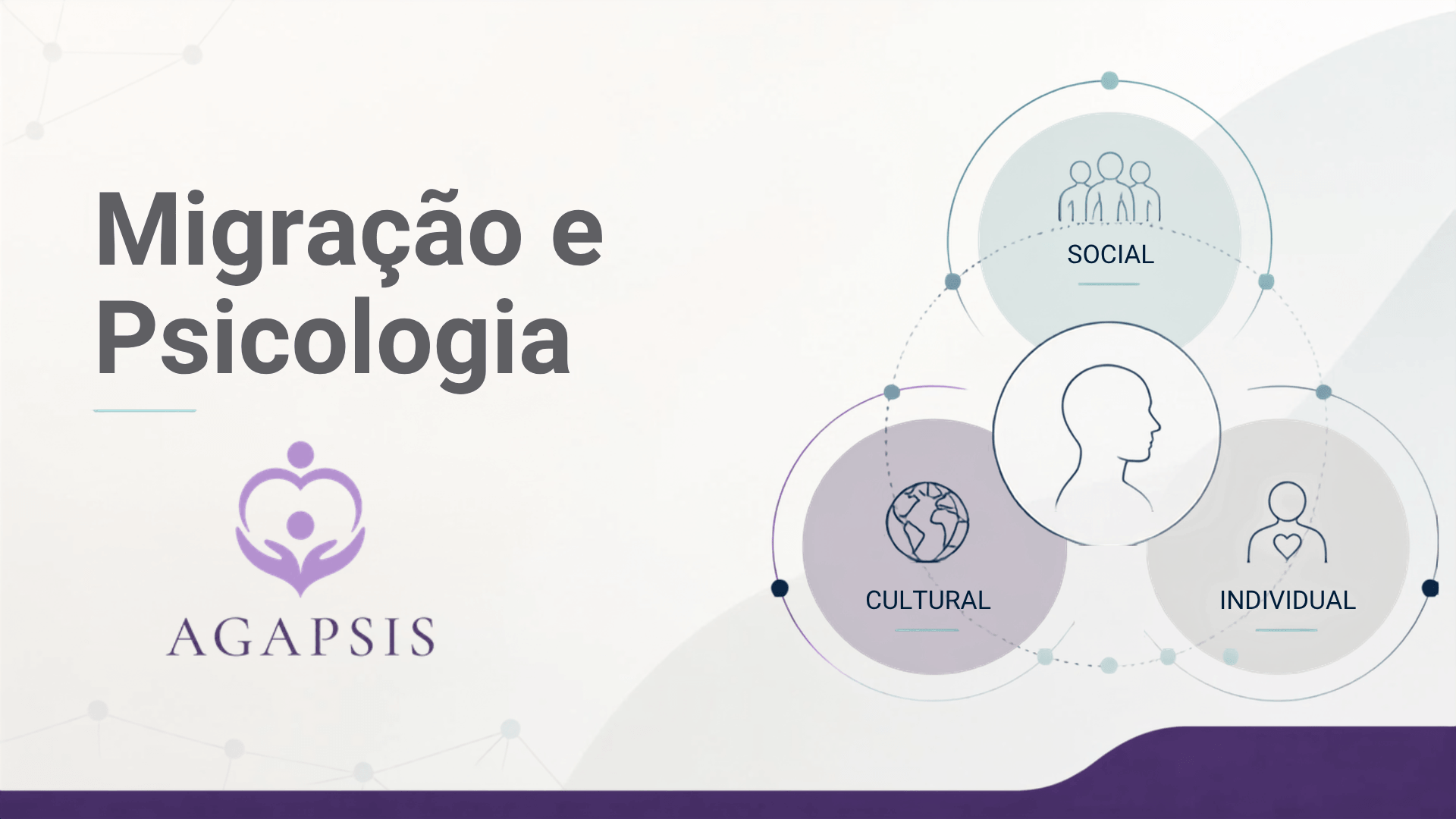
A migração é um fenômeno complexo que deve ser compreendido à luz da interdisciplinaridade. O estudo de seus diversos aspectos mobiliza diferentes campos das ciências sociais e humanas, entre outras áreas do conhecimento. A Psicologia, por sua vez, pode contribuir para a compreensão das experiências subjetivas envolvidas nos processos migratórios, considerando tanto seus aspectos individuais quanto sociais e culturais.
O psicólogo que atua clinicamente com pessoas migrantes deve estar atento às diversas questões implicadas quando um sujeito muda de ambiente de maneira tão significativa. É importante reconhecer que essa mudança pode envolver não apenas um novo espaço físico, mas também uma nova língua, cultura, formas de comportamento, códigos sociais e modos de estabelecer vínculos.
Nesse contexto, o psicólogo precisa estar atento aos efeitos que o conjunto desses fatores pode produzir sobre aquele indivíduo que procura sua escuta, sem, contudo, pressupor que a experiência migratória necessariamente produzirá sofrimento ou dificuldades de adaptação. Cada sujeito vivenciará esse processo de maneira singular, podendo encontrar nele tanto desafios quanto novas possibilidades.
Para isso, é fundamental que o psicólogo reconheça seus próprios referenciais sociais e culturais, evitando tomá-los como universais. Mais do que se despir de seu próprio contexto, trata-se de desenvolver uma atitude de abertura à alteridade, capaz de acolher modos de viver e de significar a experiência que podem ser diferentes daqueles que lhe são familiares.

A pessoa que procura o psicólogo pode estar diante de questões inéditas para ambos. Por isso, uma postura de escuta, curiosidade e suspensão de pressupostos é fundamental para que o encontro terapêutico possa possibilitar uma compreensão mais cuidadosa da demanda apresentada.
O psicólogo que recebe em sua clínica questões relacionadas à imigração compreende que a pessoa migrante está atravessando um processo singular de transformação em seu modo de estar no mundo. Cabe-lhe acompanhá-la nesse percurso, respeitando sua história, sua singularidade e seus próprios modos de elaborar essa experiência.
Why Link Psychology to Immigration?
Migration is a complex phenomenon that should be understood from an interdisciplinary perspective. The study of its various aspects draws on different fields within the social and human sciences, among other areas of knowledge. Psychology, in turn, can contribute to an understanding of the subjective experiences involved in migratory processes, taking into account their individual, social, and cultural dimensions.
A clinical psychologist working with migrants must be attentive to the various issues involved when an individual undergoes such a significant change in their environment. It is important to recognize that this change may involve not only a new physical space, but also a new language, culture, forms of behavior, social codes, and ways of establishing relationships.
In this context, the clinical psychologist needs to be attentive to the effects that the combination of these factors may have on the individual seeking their clinical listening, without, however, assuming that the migratory experience will necessarily result in suffering or difficulties in adaptation. Each individual will experience this process in a unique way, and may encounter in it both challenges and new possibilities.
For this reason, it is essential that the clinical psychologist recognize their own social and cultural frameworks of reference, avoiding treating them as universal. Rather than attempting to strip themselves of their own context, the task is to develop an attitude of openness to otherness, capable of embracing ways of living and of giving meaning to experience that may differ from those with which they are familiar.

The person seeking psychological care may be facing issues that are unfamiliar to both of them. Therefore, an attitude of listening, curiosity, and suspension of assumptions is essential so that the therapeutic encounter can foster a more careful understanding of the concerns brought by the patient.
The clinical psychologist who encounters immigration-related issues in their practice understands that the migrant is undergoing a singular process of transformation in their way of being in the world. It is the clinical psychologist?s role to accompany them along this journey, respecting their history, their uniqueness, and their own ways of working through this experience.
Psicóloga Gracia Cardeal